



Creating SEO content is no longer just about adding keywords into a blog post. Google now focuses on user intent, helpful information, readability, and overall content quality. If you want your website to rank higher and attract organic traffic, you need a proper SEO content strategy.
Whether you run a business website, blog, or agency like SEO Giver, learning how to create optimized content can help improve rankings, visibility, and conversions.
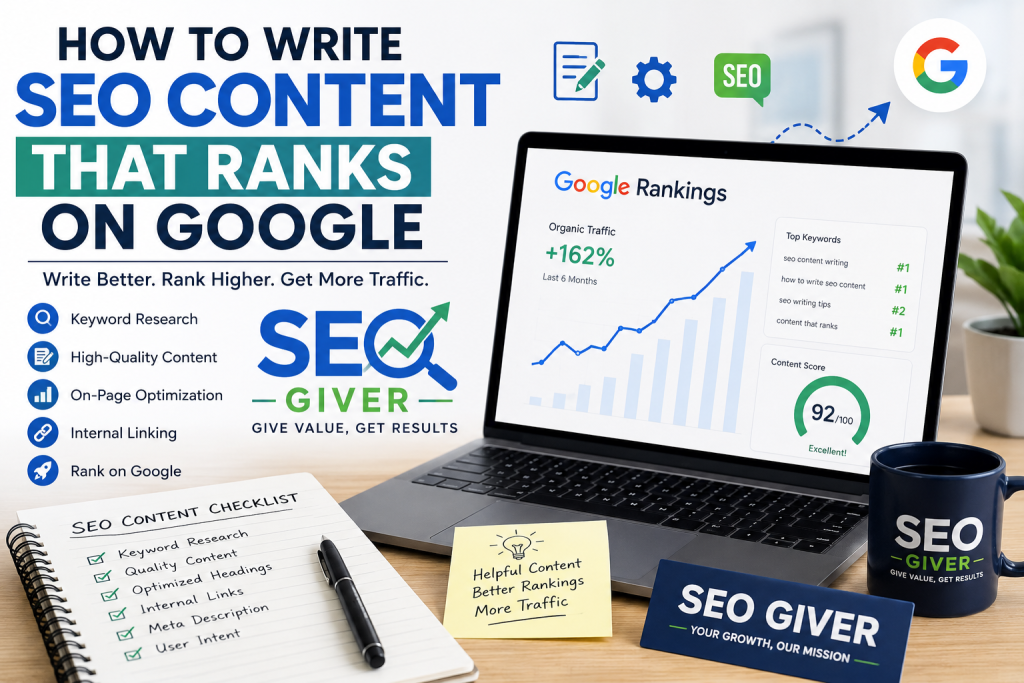
What is SEO Content?
SEO content is content created specifically to rank on search engines like Google. It is optimized using:
- Relevant keywords
- Proper headings
- User-focused writing
- Internal linking
- Meta titles and descriptions
- High-quality information
The goal is to help users while making it easier for search engines to understand your page.
Why SEO Content Matters
Good SEO content helps:
- Increase organic website traffic
- Improve Google rankings
- Build trust and authority
- Generate leads and sales
- Improve user engagement
Google rewards content that is useful, original, and satisfies search intent.
1. Start With Keyword Research
Before writing, identify what users are searching for.
Use tools like:
- Google Keyword Planner
- Ahrefs
- SEMrush
- Ubersuggest
Focus on:
- Primary keywords
- Long-tail keywords
- Search intent
- Competition level
Example:
Primary Keyword: How to Write SEO Content
Secondary Keywords:
- SEO writing tips
- SEO blog writing
- Google ranking content
2. Understand Search Intent
Search intent means understanding why users are searching.
There are four main types:
- Informational
- Navigational
- Transactional
- Commercial
For blog posts, informational intent works best. Your content should answer the user’s question clearly and quickly.
3. Write an SEO-Friendly Title
Your title is one of the most important ranking factors.
Tips:
- Keep it under 60 characters
- Add primary keyword naturally
- Make it engaging
- Use numbers or power words
Example:
How to Write SEO Content That Ranks on Google
4. Create a Strong Introduction
The introduction should:
- Explain the topic
- Include the primary keyword
- Encourage users to continue reading
Avoid unnecessary filler content.
5. Use Proper Heading Structure
Use:
- H1 for title
- H2 for main sections
- H3 for subtopics
This improves:
- Readability
- User experience
- Search engine understanding
6. Optimize Content With Keywords Naturally
Do not stuff keywords.
Instead:
- Use keywords naturally
- Add related terms
- Include keywords in:
- Title
- Headings
- First paragraph
- Meta description
- Image alt text
Google understands context better now, so focus on natural writing.
7. Write High-Quality Helpful Content
Google prioritizes content that is:
- Helpful
- Accurate
- Original
- Easy to understand
Best Practices:
- Use short paragraphs
- Add bullet points
- Include examples
- Answer common questions
- Keep content updated
How to Rank #1 on Google (Step-by-Step Strategy)
8. Optimize Images for SEO
Images improve engagement and readability.
Tips:
- Use compressed images
- Add descriptive file names
- Include alt text
- Use relevant visuals
Example alt text:
“SEO content writing tips for Google ranking”
9. Add Internal and External Links
Internal Links
Link to related pages on your website.
Example:
- SEO services
- Link building
- Technical SEO
External Links
Link to trusted sources when needed.
This improves credibility and helps users learn more.
10. Improve Readability
Readable content performs better.
Tips:
- Use simple language
- Write short sentences
- Avoid large blocks of text
- Use transition words
- Format properly
Good readability improves user engagement and reduces bounce rate.
11. Write an Optimized Meta Description
Meta descriptions help improve click-through rates.
Best Practices:
- Keep under 160 characters
- Include target keyword
- Make it compelling
Example:
Learn how to write SEO content that ranks on Google using proven strategies, keyword optimization, and content writing tips.
12. Update Content Regularly
SEO is not a one-time process.
Update old blog posts with:
- Fresh information
- New keywords
- Better examples
- Updated statistics
Google prefers fresh and relevant content.
Common SEO Content Mistakes to Avoid
Avoid:
- Keyword stuffing
- Duplicate content
- Poor readability
- Thin content
- Ignoring search intent
- No internal links
- Slow page speed
Final Thoughts
Writing SEO content that ranks on Google requires a balance between optimization and user experience. Focus on creating helpful, engaging, and informative content that genuinely solves users’ problems.
When done correctly, SEO content can drive long-term traffic, improve authority, and help grow your online presence.
If you want professional SEO services, content writing, or ranking strategies, contact us today!
Frequently Asked Questions (FAQs)
1. What is SEO content writing?
SEO content writing is the process of creating content that is optimized for search engines like Google to improve rankings and drive organic traffic.
2. How do I choose the right keywords for SEO content?
You can choose the right keywords by using tools like Google Keyword Planner, Ahrefs, or SEMrush, focusing on search volume, competition, and user intent.
3. How long should SEO content be to rank on Google?
There is no fixed length, but high-ranking content is usually between 1000–2000 words, depending on the topic and competition.
4. How important is search intent in SEO content?
Search intent is crucial. Your content must match what users are looking for, or it won’t rank effectively on Google.
5. How often should I update my SEO content?
You should update your content every 3–6 months to keep it fresh, relevant, and aligned with the latest SEO trends.
6. What are common mistakes in SEO content writing?
Common mistakes include keyword stuffing, ignoring search intent, poor readability, and not optimizing on-page elements.
7. Can I rank on Google without backlinks?
Yes, but it’s harder. High-quality content and proper SEO can help, but backlinks still play a major role in ranking.